

INDIVIDUAL SMILE PLANNING
Some smile concerns can be addressed with one treatment. Others may need a staged approach. We consider your teeth, gums and bite together, then discuss which options may be appropriate for you.
A smile makeover is an individual treatment plan. It is shaped around your oral health, priorities and the changes you would like to consider. There is no standard combination of treatments, and you may decide that one treatment, a smaller change or no cosmetic treatment is right for you.
CASE 1
Worn teeth: rehabilitation in stages
Treatment in progress
This patient’s treatment includes composite restorations on the lower teeth and seven upper crowns. Implant treatment is planned as a later part of the coordinated plan.
The photographs below compare the appearance before treatment with progress after the lower composite restorations and seven upper crowns. They show an intermediate stage, while implant treatment is still planned.
Completed at the stage shown: lower composite restorations and seven upper crowns.
Still planned: implant treatment. These progress photographs do not represent the completion of the whole treatment plan.
Front view
BEFORE TREATMENT
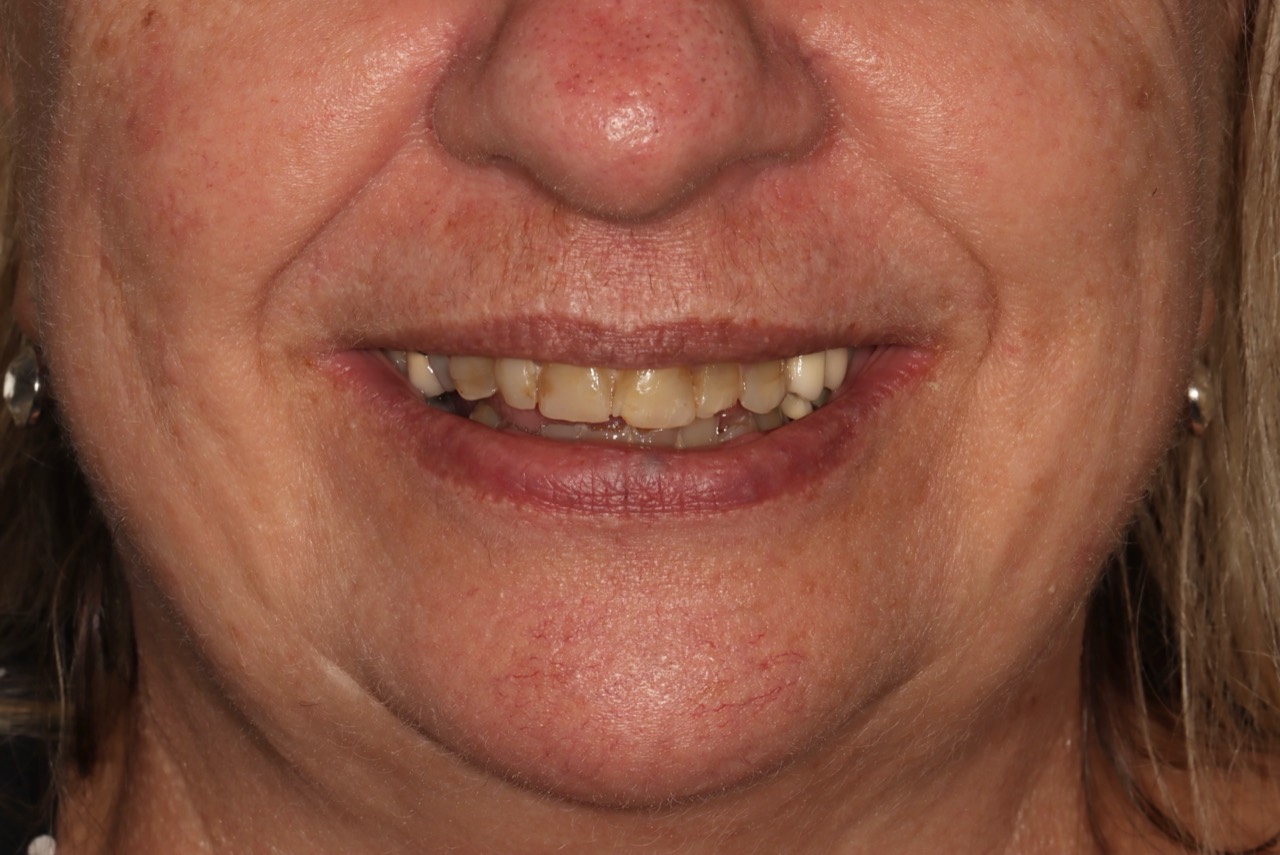
TREATMENT IN PROGRESS
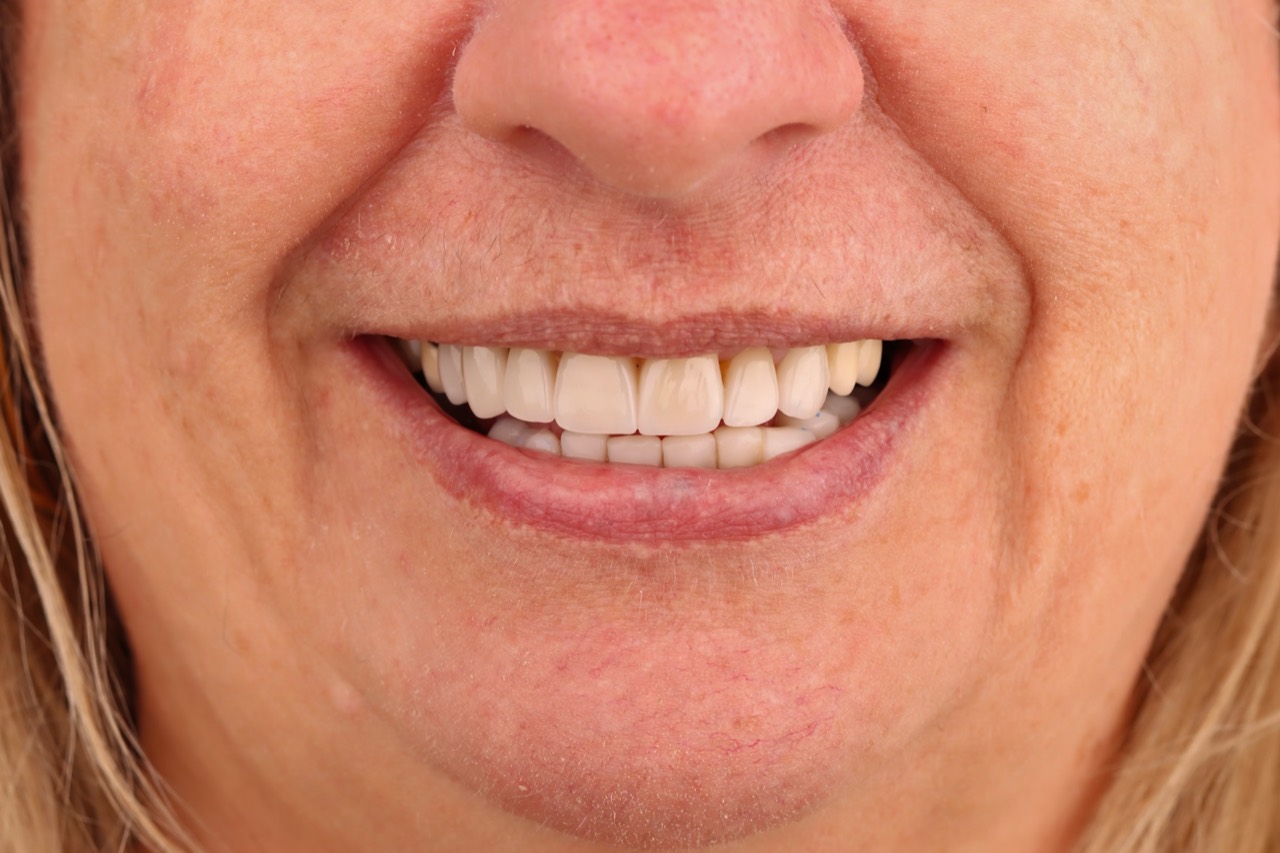
These photographs show one individual patient’s treatment at different stages. Lighting, facial expression and camera position differ. Individual treatment needs, suitability, risks and outcomes vary.
View two further angles of Case 1
Side view 1
BEFORE TREATMENT
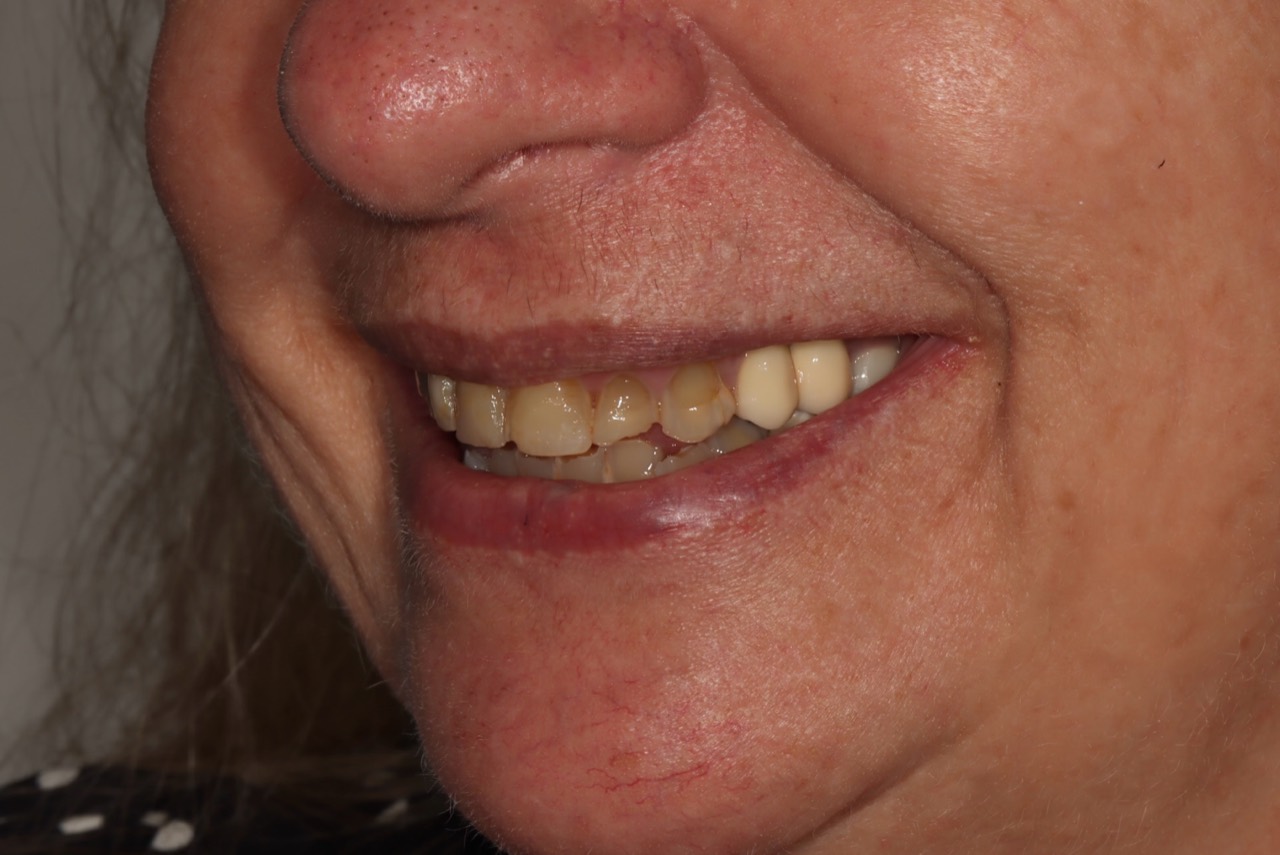
TREATMENT IN PROGRESS
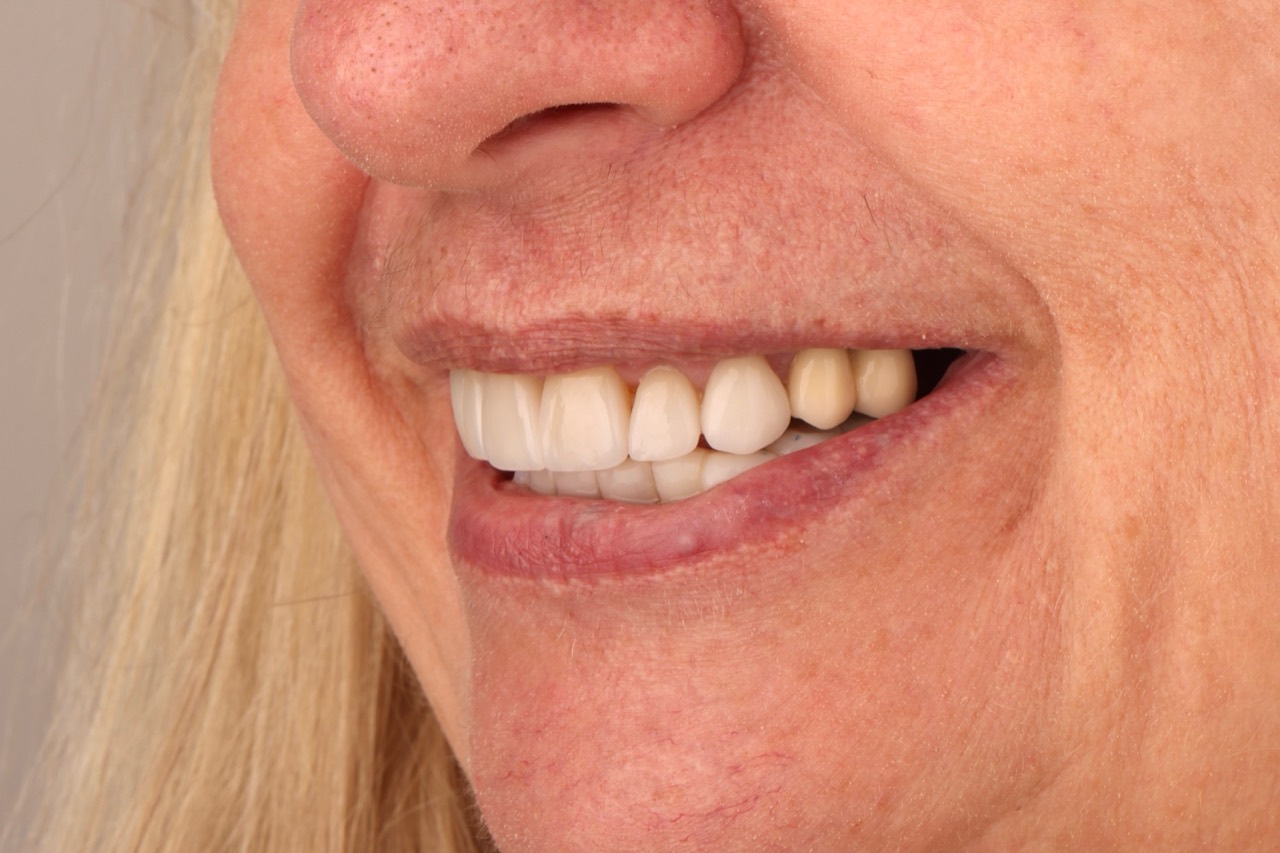
Side view 2
BEFORE TREATMENT
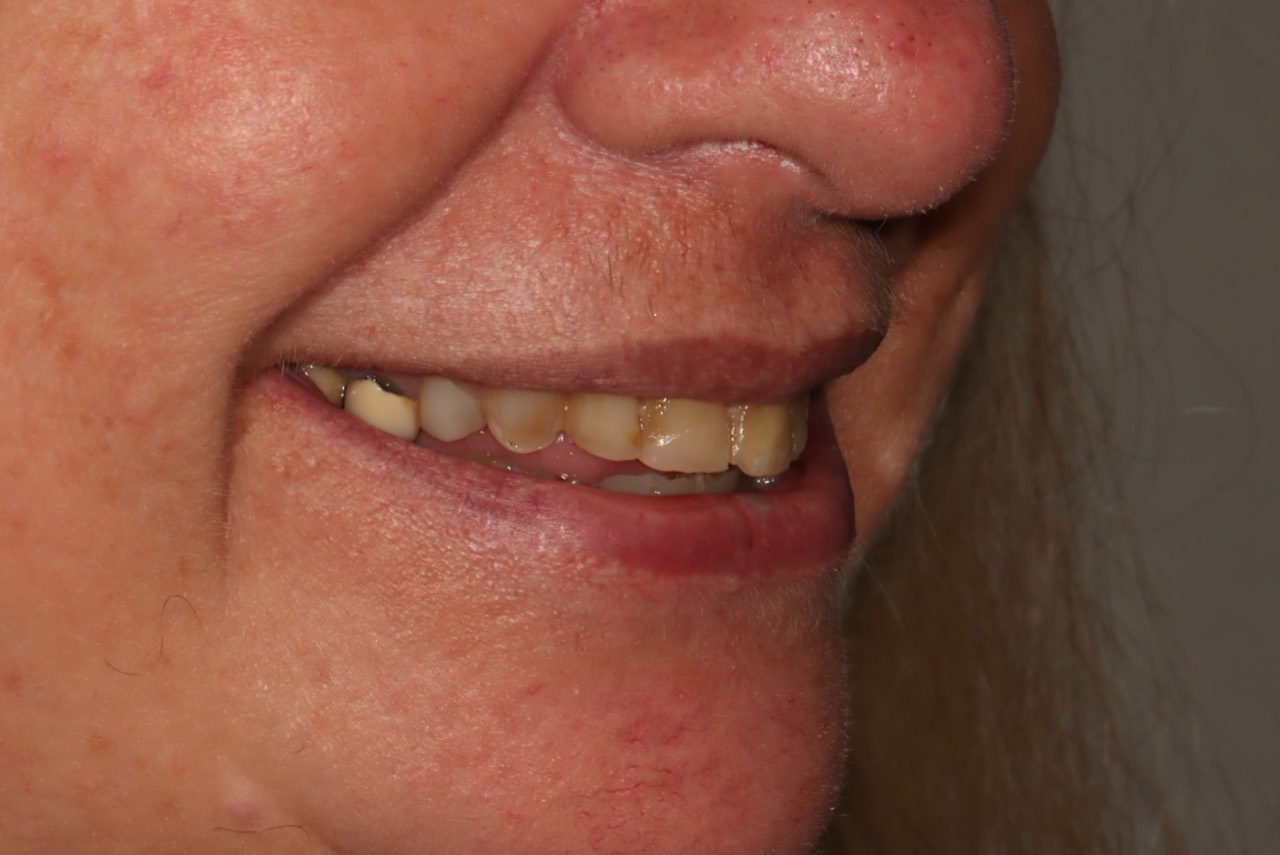
TREATMENT IN PROGRESS
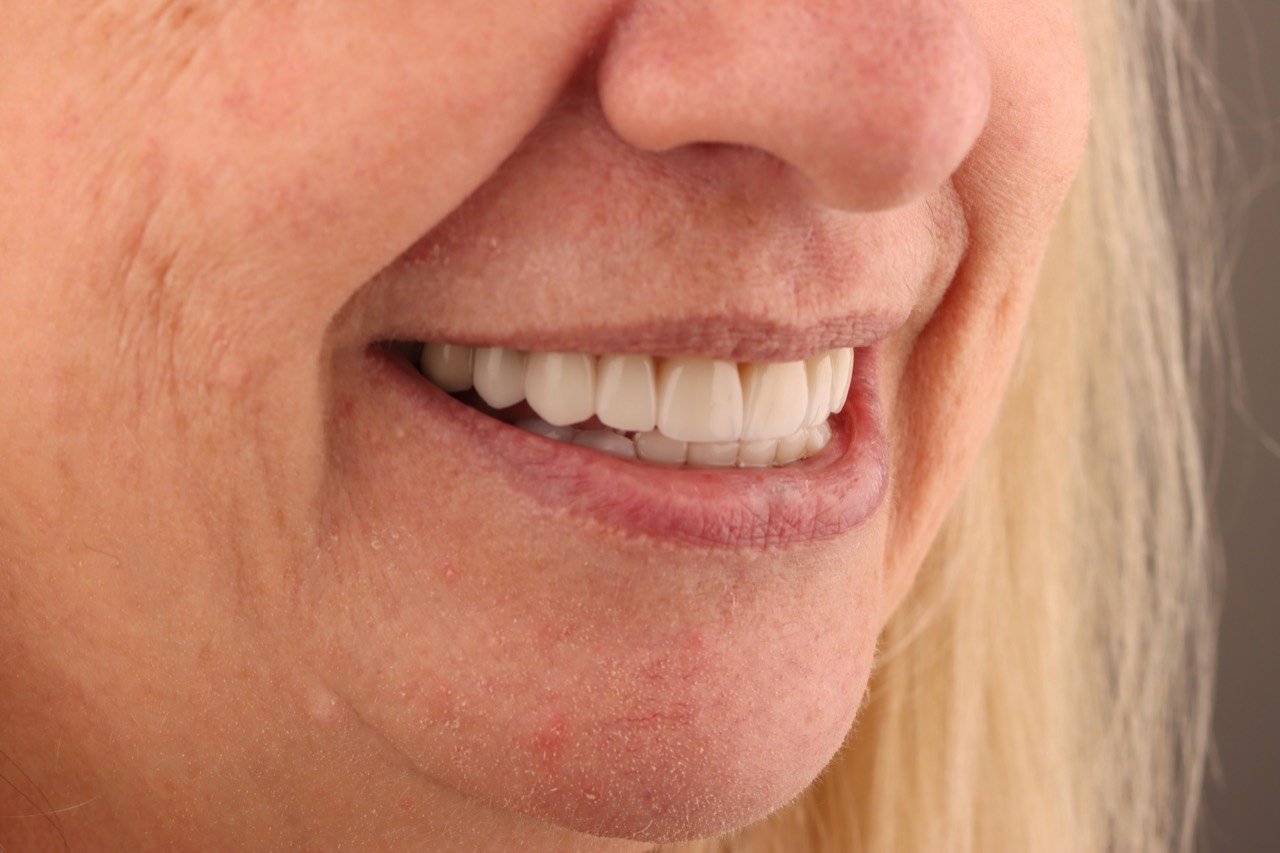
All three comparisons show the same patient. Treatment is ongoing; the progress images do not show completed implant treatment.
CASE 2
Invisalign followed by six composite veneers
This patient’s treatment began with Invisalign to improve tooth positioning and alignment. Six composite veneers were then placed on the front teeth to refine their shape and proportions.
The photographs compare the smile before combined treatment with the appearance after both stages were completed.
Stage 1: Invisalign. Tooth positioning and alignment.
Stage 2: Six composite veneers. Shape and proportions of the front teeth.
BEFORE TREATMENT
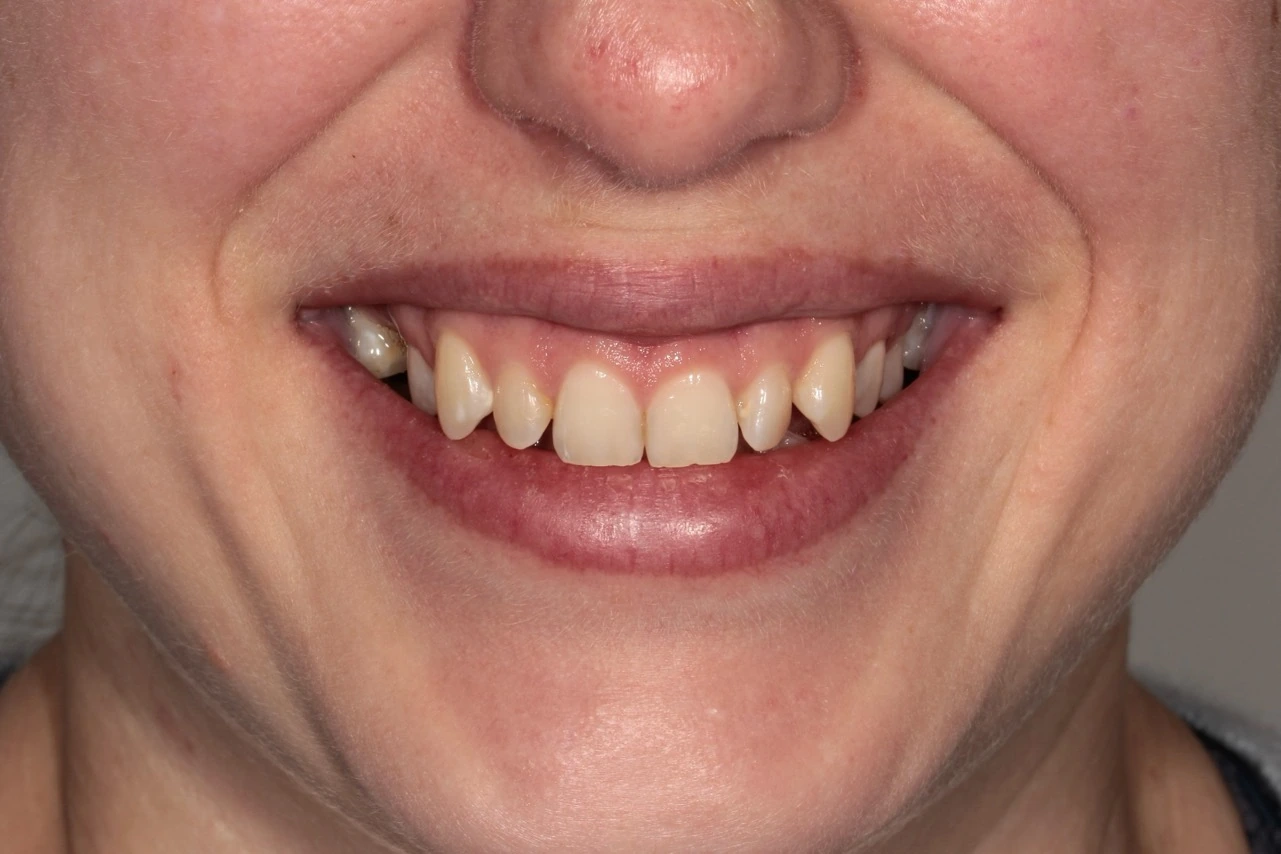
AFTER COMBINED TREATMENT
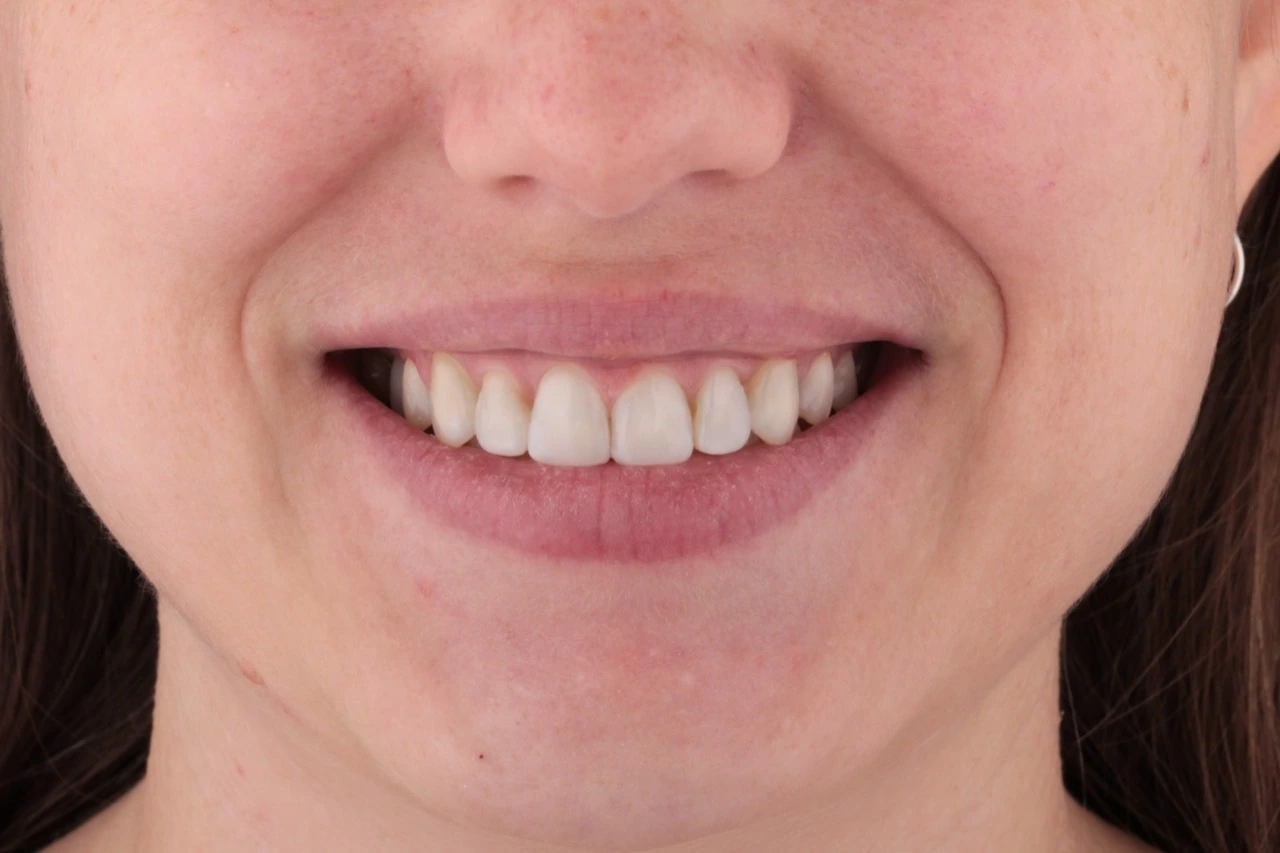
These photographs show one individual’s combined treatment, not the result of Invisalign alone. Lighting, camera angle and expression differ. Suitability, treatment needs, risks and outcomes vary.
View two further angles of Case 2
BEFORE TREATMENT
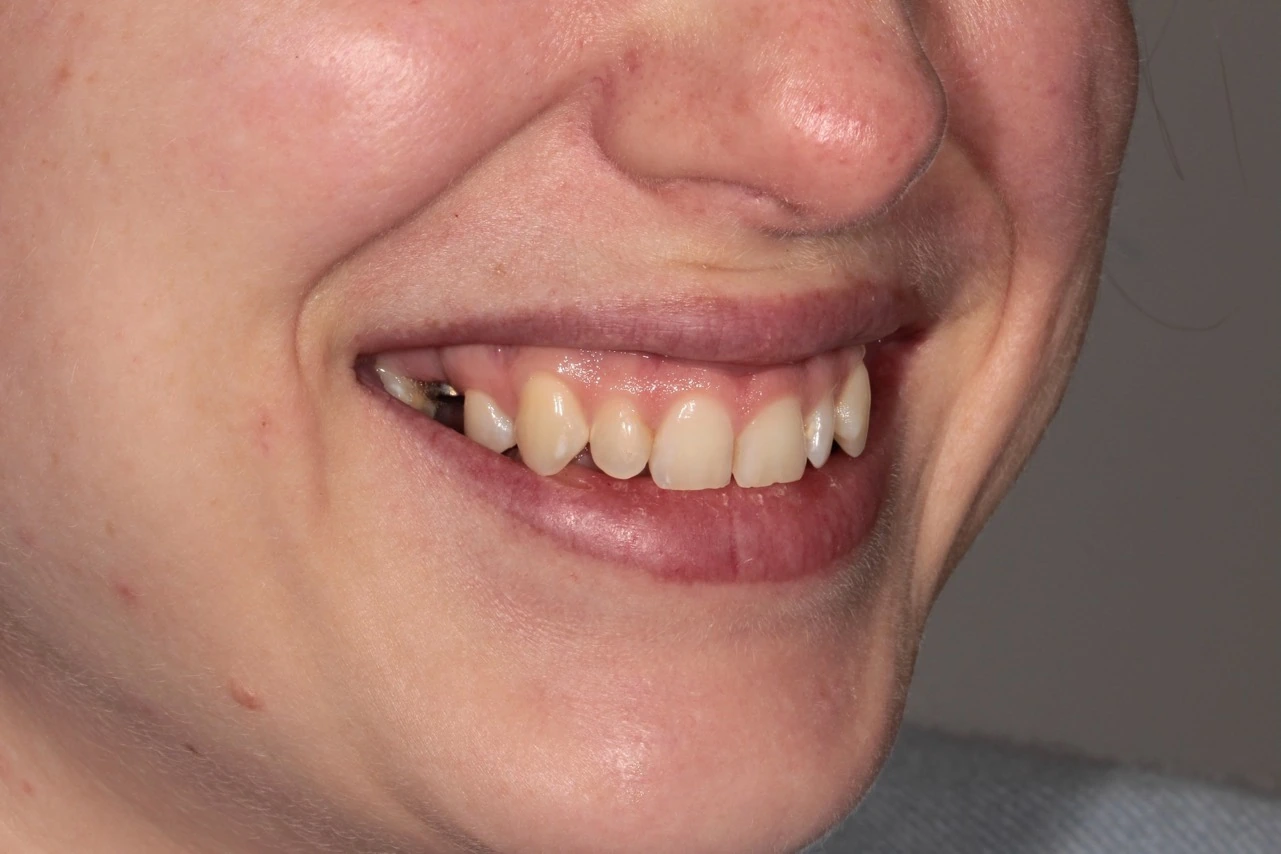
AFTER COMBINED TREATMENT
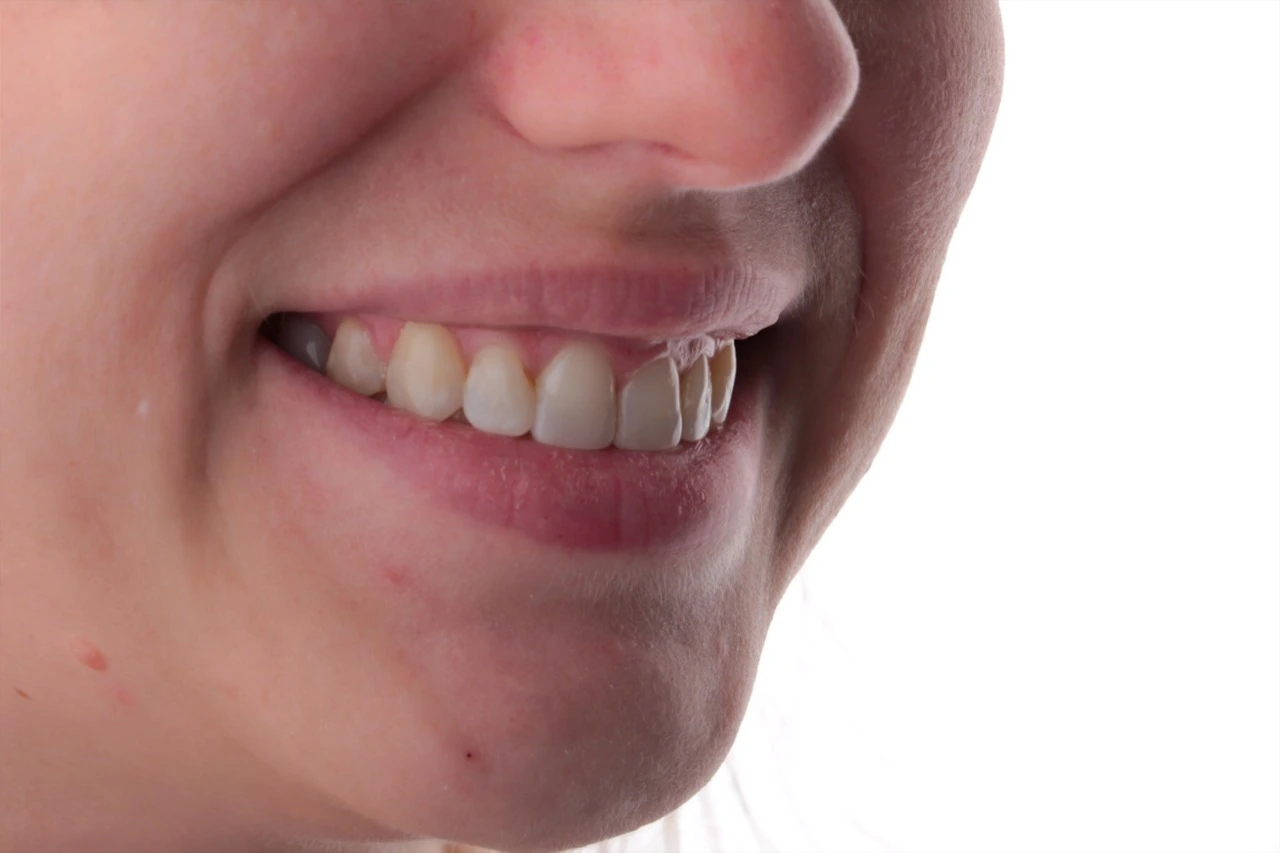
BEFORE TREATMENT
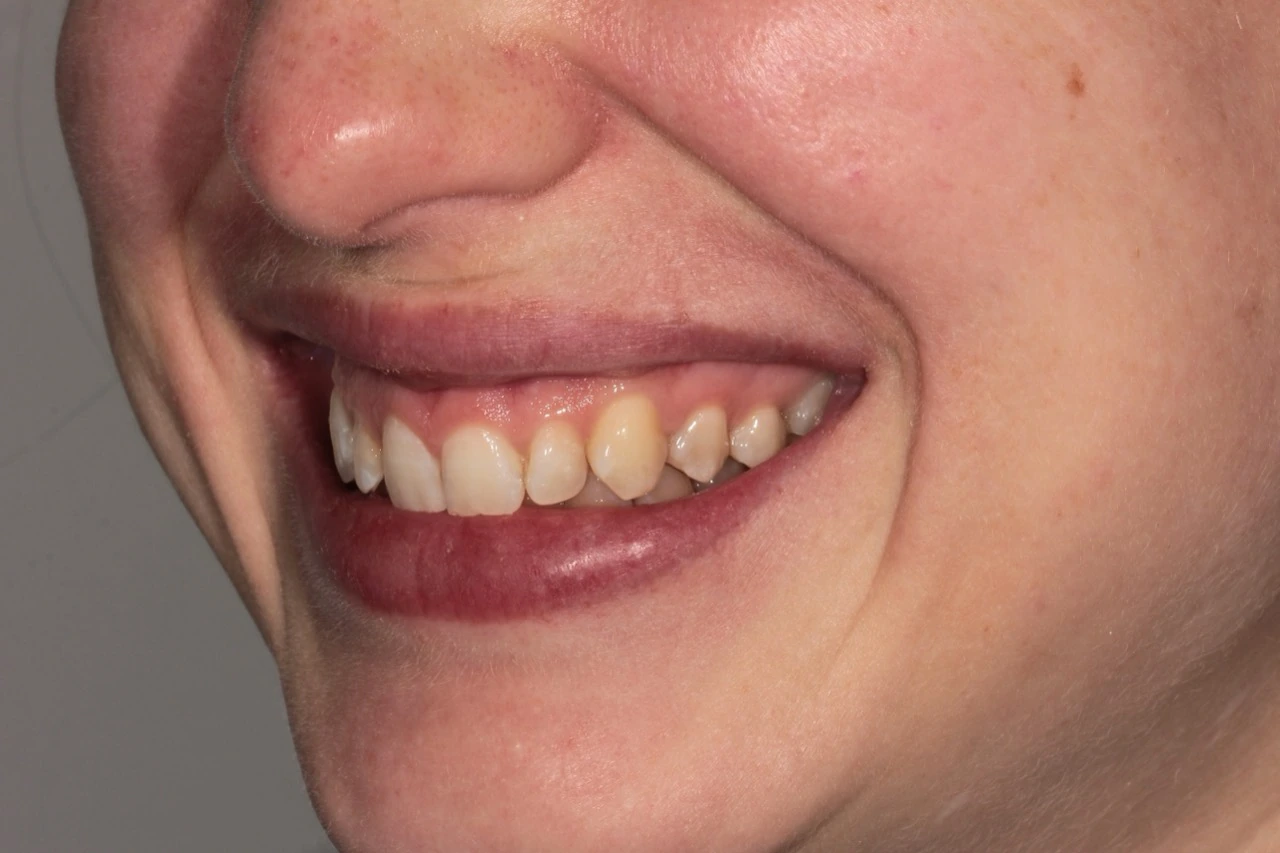
AFTER COMBINED TREATMENT
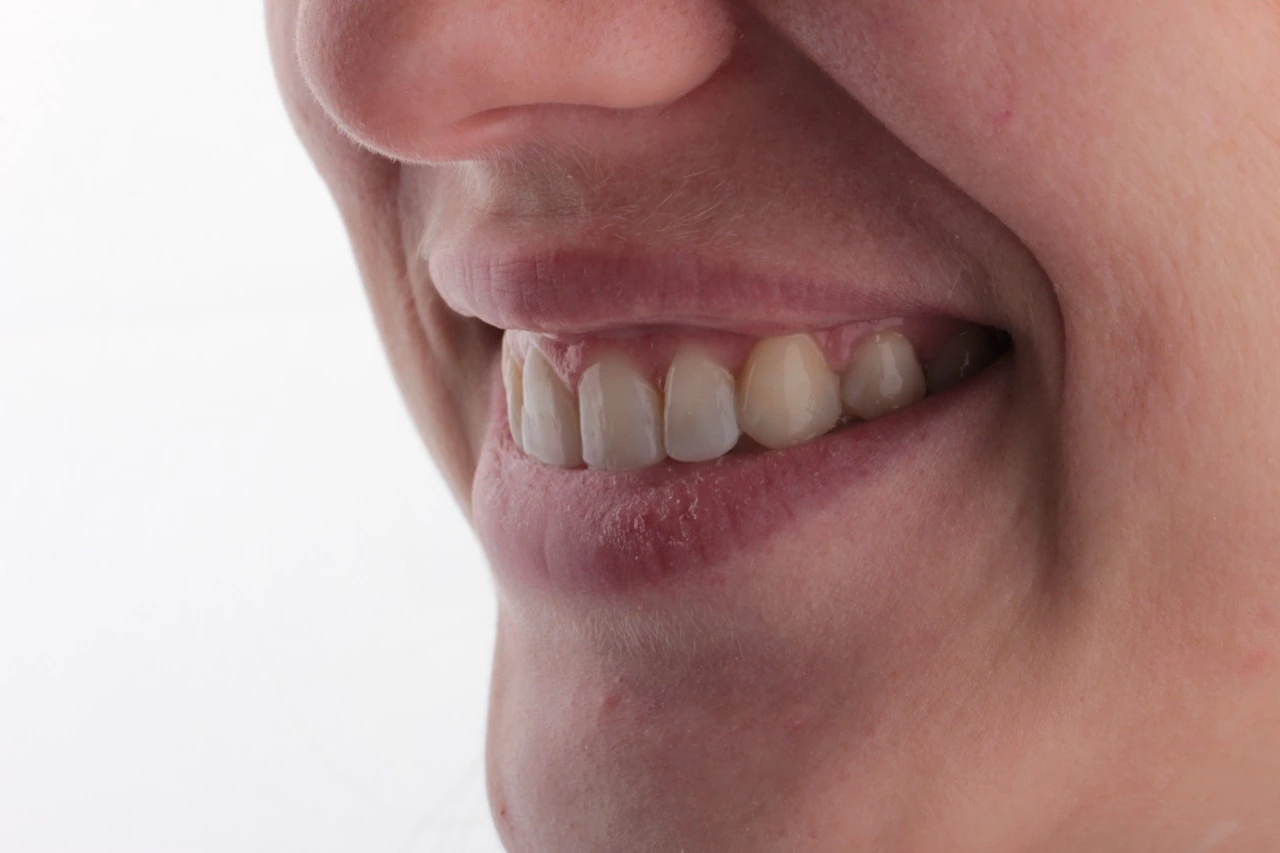
All three comparisons show the same patient, before combined treatment and after Invisalign and six composite veneers.
Not everyone who has Invisalign needs veneers afterwards. The combination and sequence of care depend on individual assessment.
CASE 3
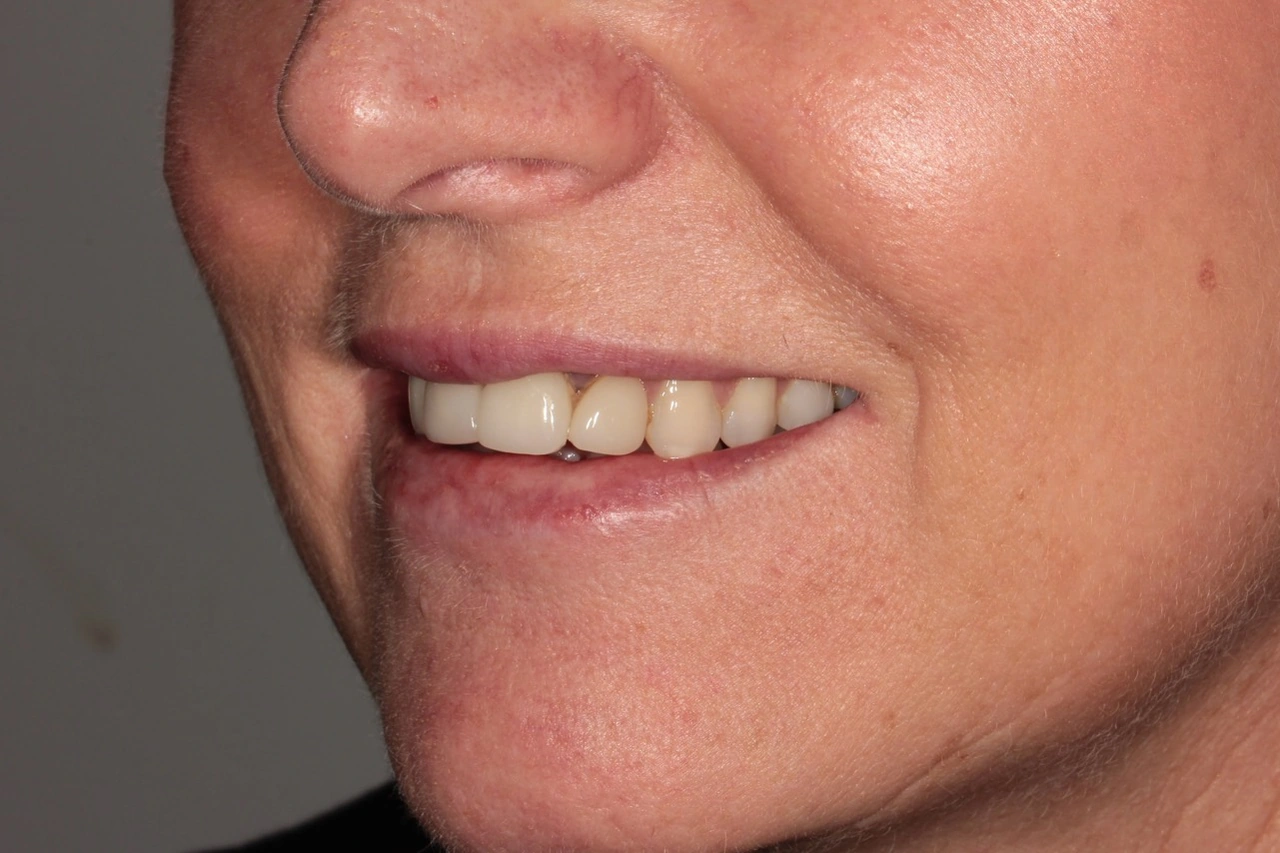
Invisalign followed by four porcelain veneers
This patient underwent Invisalign treatment first to improve tooth alignment and positioning. Four porcelain veneers were then placed on the upper front teeth to refine their shape and proportions.
Each stage had a different role within the individual plan. The photographs compare the smile before Invisalign with the appearance after both orthodontic and veneer treatment.
Stage 1: Invisalign. Tooth alignment and positioning.
Stage 2: Four porcelain veneers. Shape and proportions of the upper front teeth.
BEFORE TREATMENT
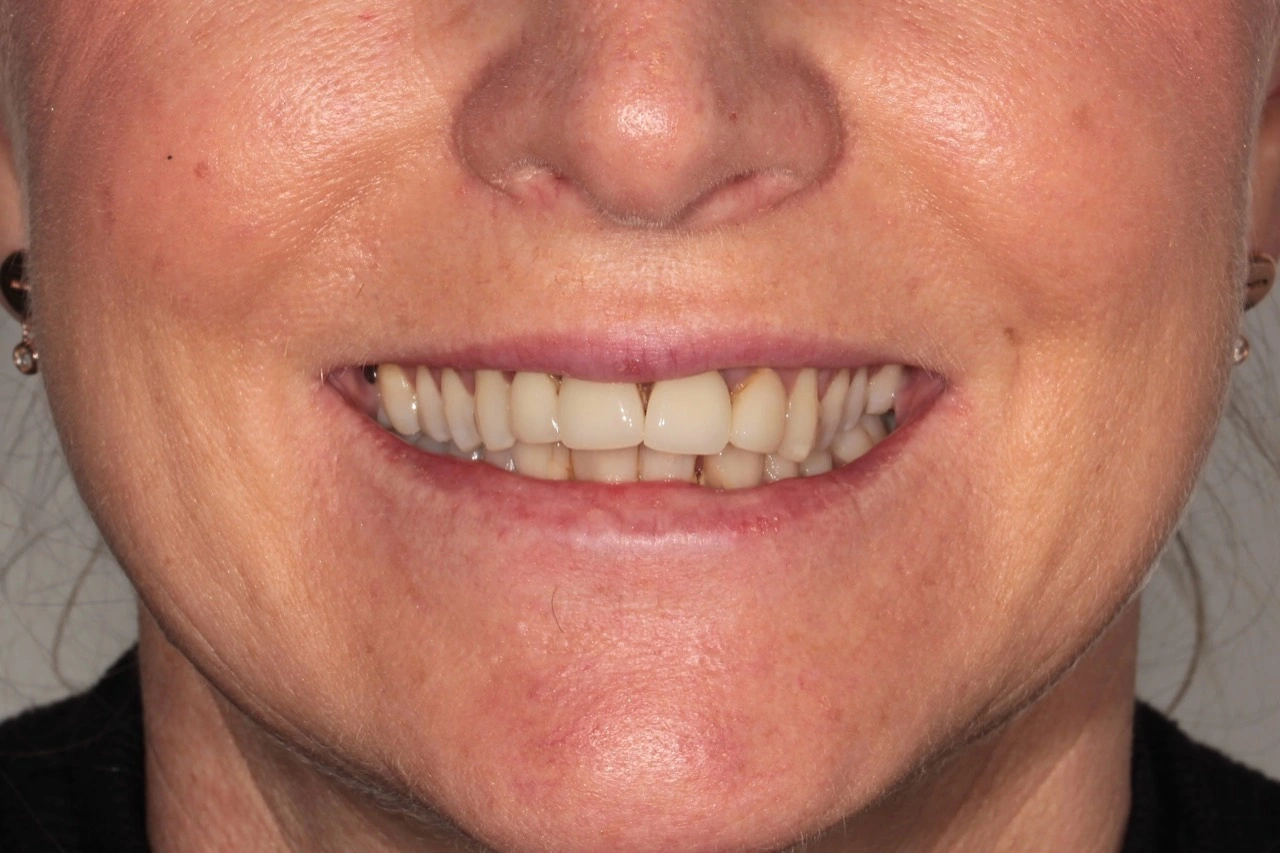
AFTER COMBINED TREATMENT
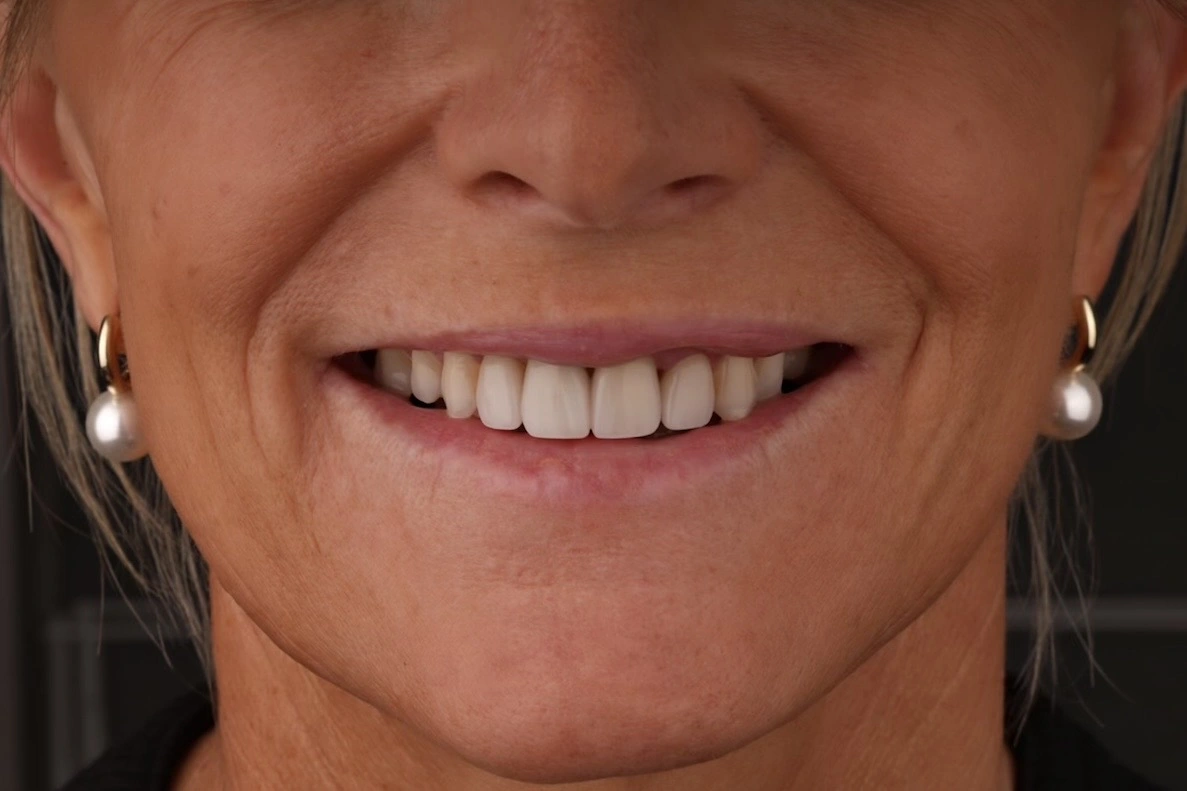
These photographs show one individual’s combined treatment. Lighting, camera angle and expression differ. Treatment suitability, the number of veneers required, risks and outcomes vary between patients.
View two further angles of Case 3
BEFORE TREATMENT
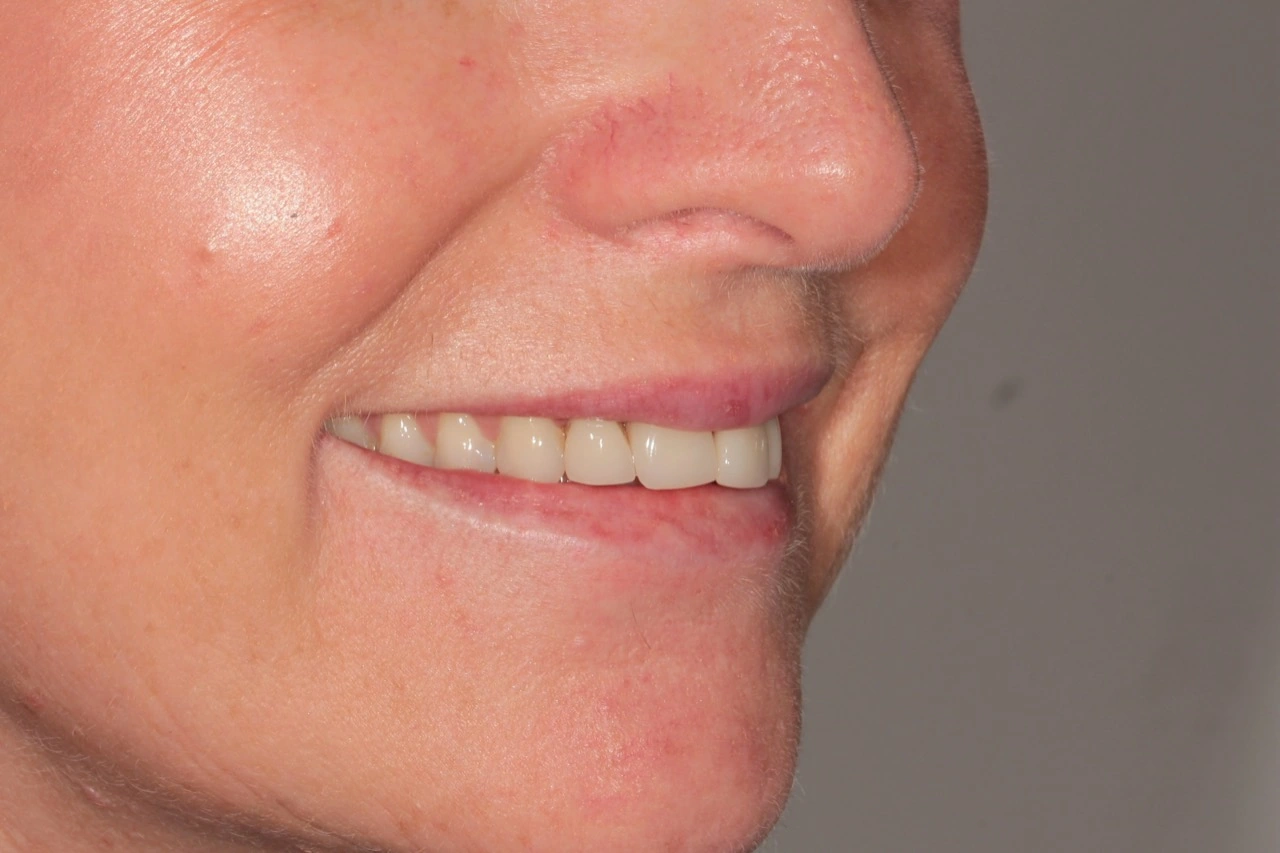
AFTER COMBINED TREATMENT
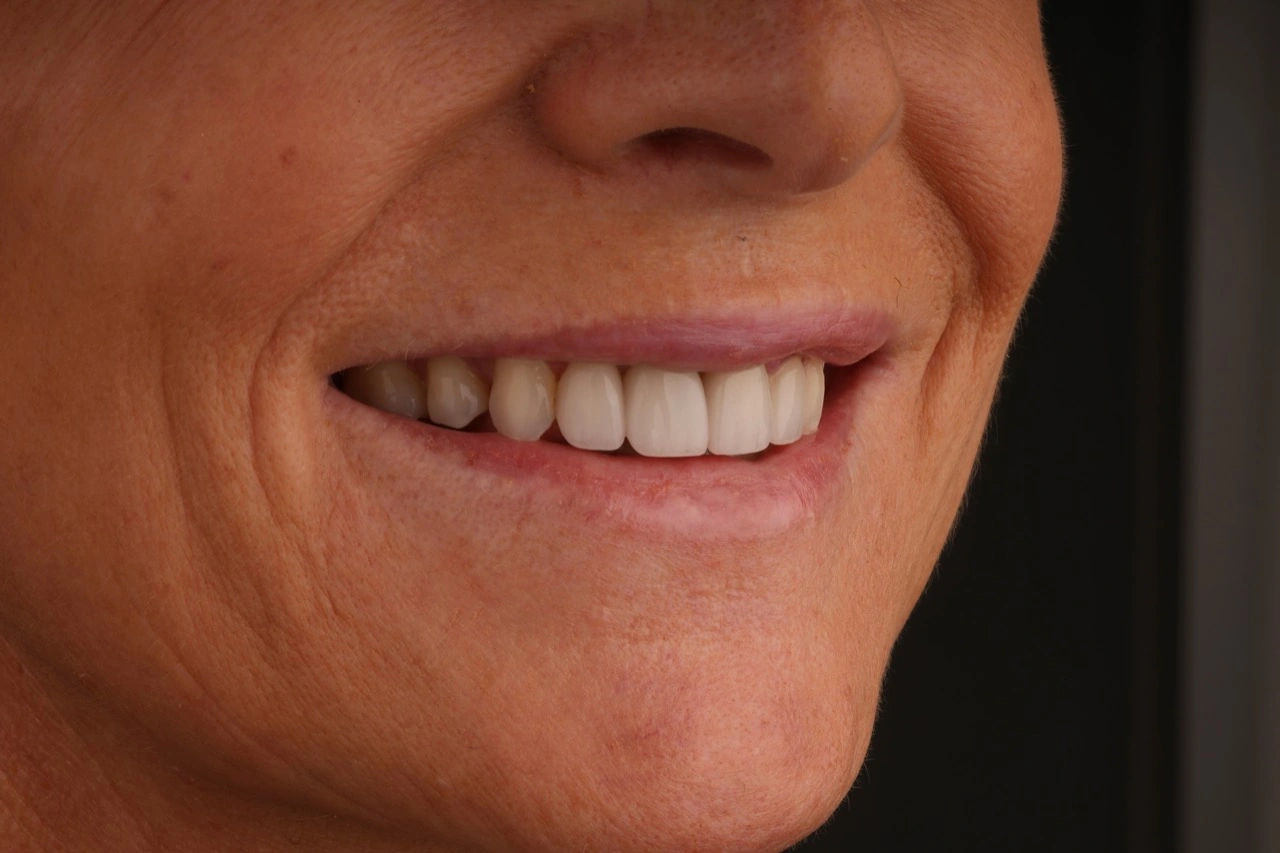
BEFORE TREATMENT
AFTER COMBINED TREATMENT
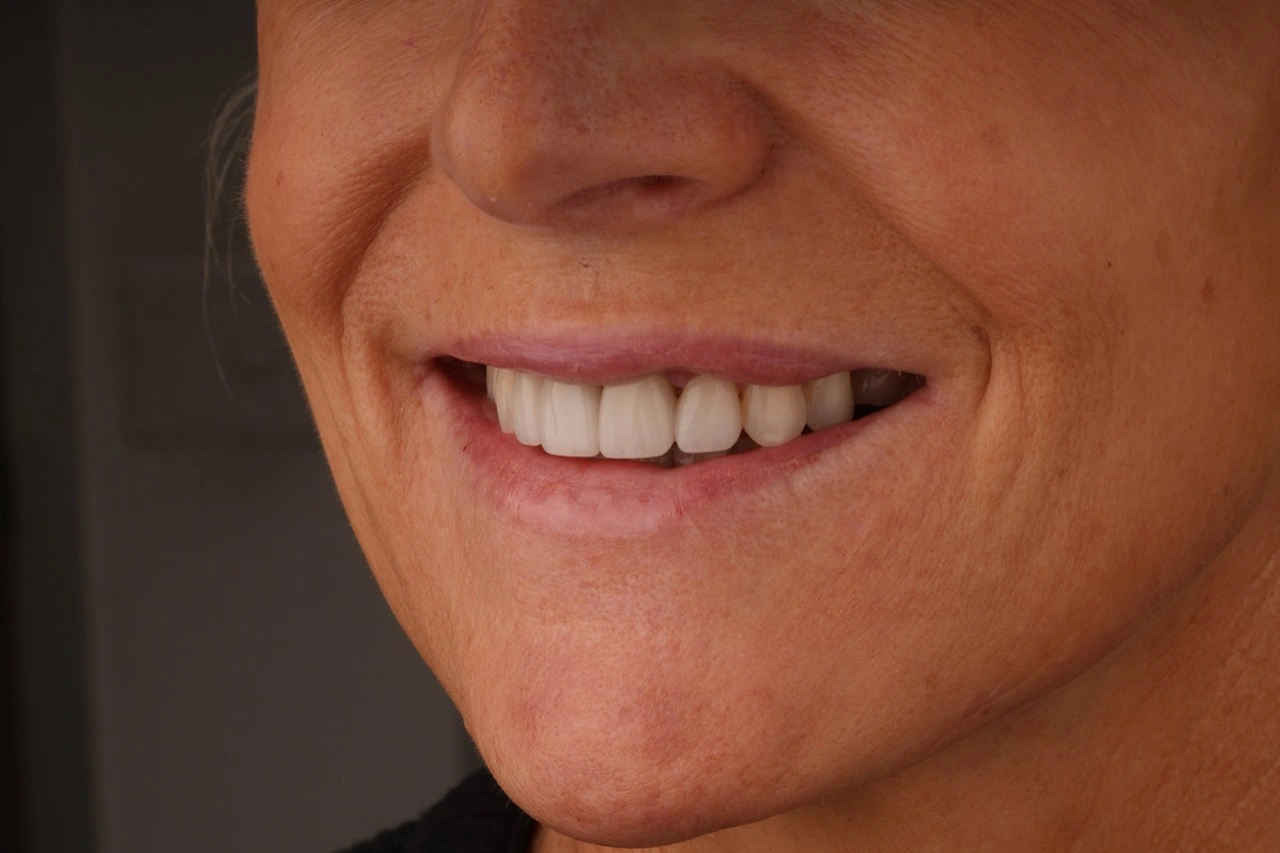
All three comparisons show the same patient, before Invisalign and after Invisalign and four upper front porcelain veneers.
For some patients, alignment alone may address their concerns without adding veneers. The sequence of care, number of veneers and amount of tooth preparation depend on individual assessment.
Different treatments have different roles
A coordinated plan considers how each proposed treatment relates to the others. Your dentist will explain the purpose, alternatives, risks and limitations of each option before you decide.
Tooth position
Invisalign may be considered to move suitable teeth into planned positions. Alignment and spacing can be relevant before restorative treatment.
Tooth shape and appearance
Veneers cover the front surfaces of selected teeth. Composite additions or whitening may be alternatives in suitable circumstances.
Restoring individual teeth
A crown covers a prepared tooth. Composite restorations and crowns have different uses; the choice depends on the tooth and the overall plan.
Replacing missing teeth
An implant may support a replacement tooth. Bridges or dentures may also be considered, depending on individual assessment.
Planning the sequence of care
-
Understand your priorities
We discuss what you would like to change and preserve, then assess your teeth, gums and bite. Oral health and individual suitability guide the options.
-
Discuss the stages
We explain what each stage is intended to do, how treatments may relate to one another and who will provide the care. The sequence and timing depend on your plan.
-
Review and maintain
We discuss ongoing care and review. Restorations may need maintenance or replacement, and orthodontic treatment requires consideration of retention.
Some treatment may involve irreversible changes to tooth structure. Some situations may need specialist input or referral. We will explain these considerations, together with the alternatives, before treatment proceeds.
Start with your questions
You do not need to choose a treatment before your appointment. Tell us what matters to you, and we can discuss whether one treatment or a coordinated plan may be appropriate.
Further reading: Crowns, bridges and veneers — Australian Dental Association.


